Stand taller, or turn and look again
Two related things live in this category. One is posture: the same photograph of you standing as you would if somebody had just told you to. The other is angle: the same you, turned twenty or forty degrees, so you can judge a new cut, a beard or a tattoo from a side you cannot photograph on your own.
What posture is actually worth
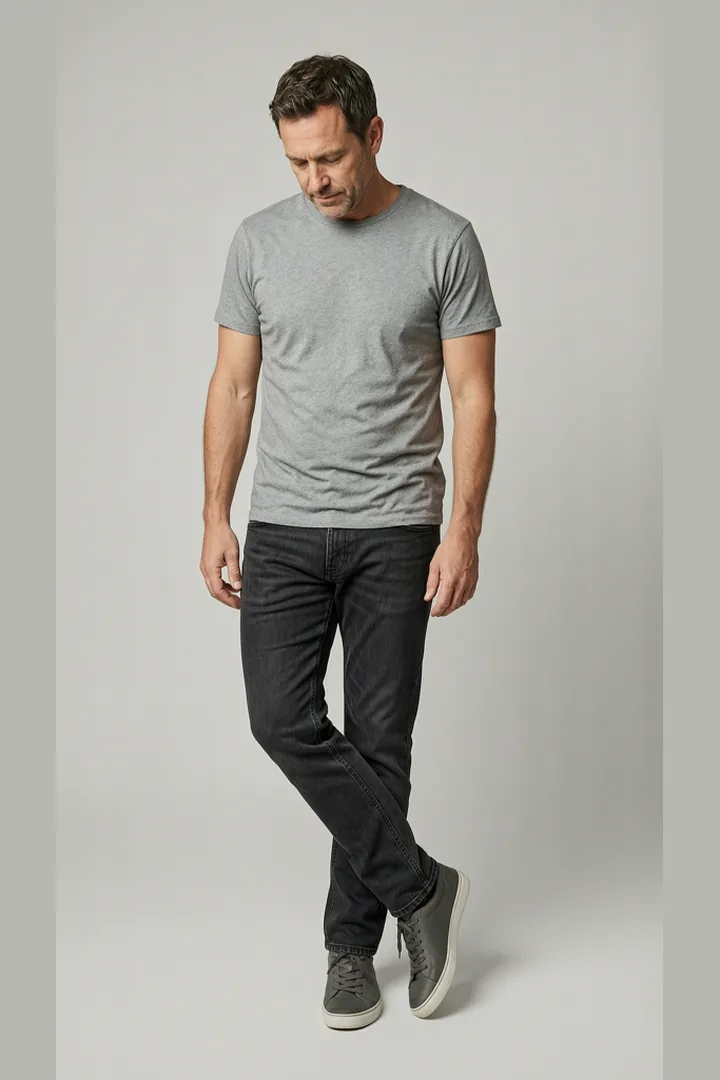
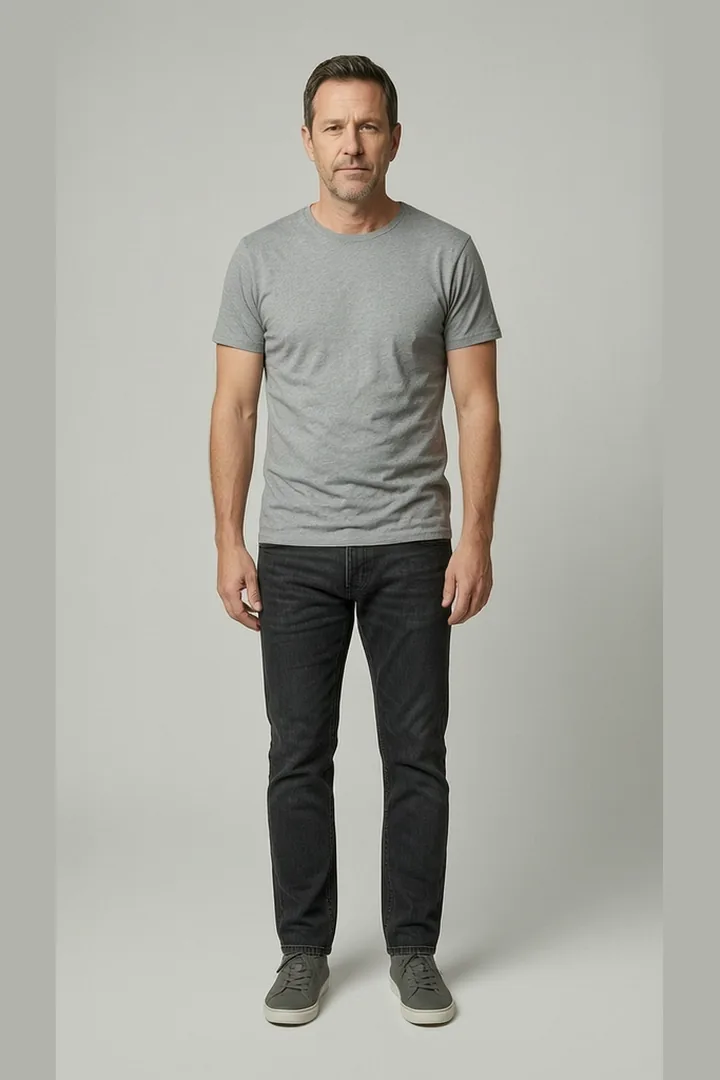
Almost nobody stands the way they think they stand. The shoulders come forward, the head goes down towards the phone, and the weight sits on one hip. It is invisible from the inside and extremely visible in a photograph, which is why so many people dislike pictures of themselves without being able to say why.
"Stand taller" and "relaxed and open" show you the same body in the same clothes with that one thing changed. It is a useful before-and-after for the same reason a physiotherapist takes one: you cannot correct a habit you have never seen.
It is also the cheapest fix in the whole catalogue for a profile photograph. Nothing about you has to change; you just have to stand up.
Turning, and why it is done backwards
The four "turn" presets rotate you twenty or forty degrees, clockwise or anticlockwise as seen from above. The point is judging something you can only see from one side in the photograph you happen to have: a fringe, a beard line, a new tattoo, a pair of glasses.
It is worth knowing how that is built, because it explains a real limitation. Image models do not reliably obey left and right, and the first version of this produced four pictures all turned the same way. So both directions now carry the identical instruction, and the anticlockwise pair simply flips your photograph before sending it and flips the result back. Everything is mirrored twice and lands the right way round.
The consequence is that a turn is a plausible reinterpretation of you from another angle, not a second photograph of the same moment. The back of a haircut it genuinely cannot show you, because the information is not in the picture you gave it.
The photo it needs
Full length for posture, head to below the feet, standing square on with a bit of room around you. A picture cropped at the knees cannot show a change in how you are standing, because most of the evidence is in the legs and the hips.
For the turn presets a head-and-shoulders photograph is fine if what you are judging is on your head. Turning is the one place where the framing rule is relaxed on purpose: rotating a body changes its outline, so demanding an identical silhouette would fight the instruction.
How it works
A selfie is enough. Face on, decent light, everyday clothes. Software screens it before anything happens; no person sees it.
Pick from presets. There is nothing to type and nothing to learn.
Slide between before and after, keep what you like, stack another change, download.
Options you can tap
Questions
Does it change my body shape?
No. It changes how you are standing, not how you are built. Weight, proportions and face stay as they are.
Can it show me the back of my head?
No. A turn is a reinterpretation from another angle, not a second photograph. What is not in your picture cannot be recovered from it.
What photo do I need for posture?
A full-length one, head to below the feet. Cropped at the knees there is nothing to see, because posture shows in the hips and legs.
Why are there two directions?
So you can turn towards whichever side you want to look at. The anticlockwise pair works by mirroring the photo, because image models do not reliably obey left and right.
Is it free?
Yes, to start with. You get a few free respecs on your first visit with no account and no card; after that you buy credits or subscribe.
Want to try it on yourself?
Upload one photo and see it in about twelve seconds. A few free respecs to start, no account and no card. Adults only; your photos stay private, every image is checked, and photos and results are deleted after 24 hours.
Try it free