What will I look like when I am older?
Everybody has wondered, and the honest answer involves genetics, sunlight and luck that no photograph can know about. What respecced can do is show you the same face with the changes that time actually makes, on your own photograph rather than on a stranger's, in about twelve seconds.
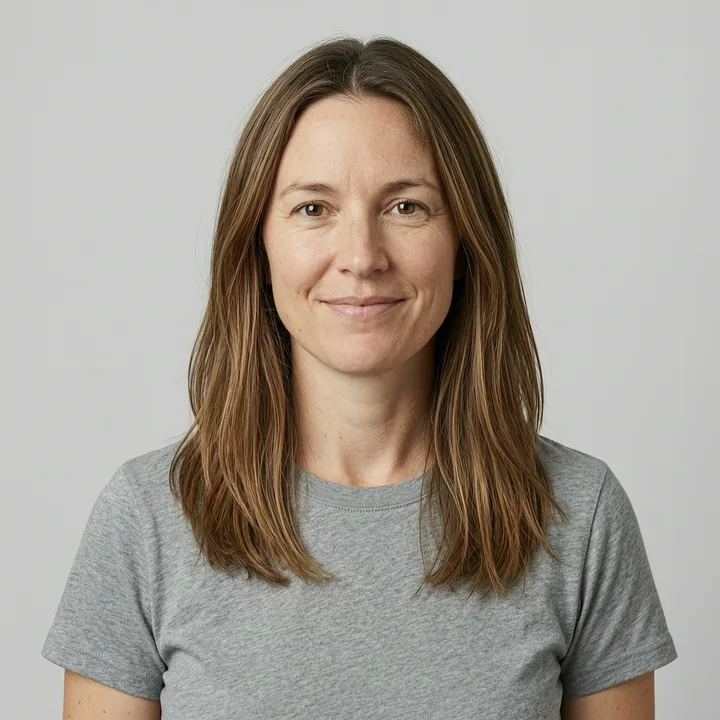
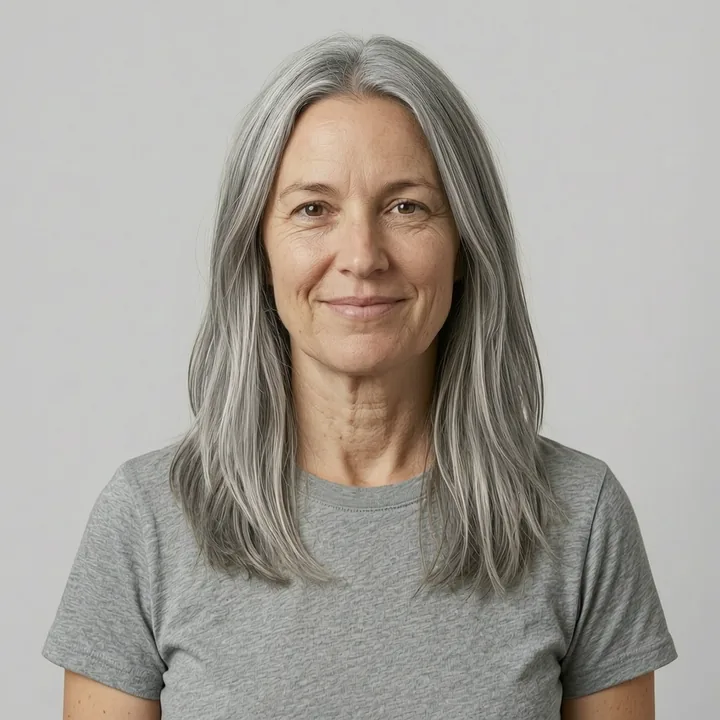
Both directions, and what each is good for
Forwards is the one people come for. Ten years is the interesting one, because it is close enough to be a real prospect rather than a novelty; twenty and thirty are the ones that get shared.
Backwards is quietly more useful than it sounds. Ten or twenty years younger on a photograph of yourself is a reasonable way to see what a photograph from that time would have looked like, and people use it to settle arguments about whether they have changed as much as they think they have.
It ages the whole face, including the hair
Aging is not wrinkles. It is the hairline, the grey coming in at the temples and spreading, the skin losing its evenness, the jaw softening, the neck going before the face does. All of that is described in the instruction, which is why the example above reads as the same woman twenty years on rather than the same photograph with lines drawn on it.
The age presets are also among the few that take a hat off. A baseball cap hides precisely the hair that is going to grey, so leaving it on would hide most of the change you asked to see.
Adults only, in both directions
Every photograph is screened on the way in and every result is screened on the way out, and anyone who may be under eighteen is refused at either end. Because age is the one category where the preset is allowed to change how old somebody looks, the result is judged strictly on its own: a result whose age range reaches below eighteen is blocked even when the original photograph was plainly an adult.
In practice that means "twenty years younger" will not take a thirty-year-old back to childhood, and should not. If a younger result is refused, that is the rule working rather than something going wrong.
It is an illustration, not a prediction
Nobody can tell you from one photograph how you will age. Two people with the same face at thirty can look ten years apart at sixty on the strength of sun, sleep and smoking alone, and none of that is visible in a selfie.
What this shows is the ordinary shape of aging applied to your own features: where your face would soften, how the grey would sit against your hair, what your own bone structure looks like with another two decades on it. That is worth seeing, and it is worth not mistaking for a forecast.
How it works
A selfie is enough. Face on, decent light, everyday clothes. Software screens it before anything happens; no person sees it.
Pick from presets. There is nothing to type and nothing to learn.
Slide between before and after, keep what you like, stack another change, download.
Options you can tap
Questions
How accurate is it?
It is an illustration, not a prediction. It applies the ordinary changes of aging to your own features; it cannot know about your genetics, your sun exposure or your habits.
Can it make me look younger too?
Yes, ten or twenty years younger. It will not take an adult back to looking like a child, and a result that reads as under eighteen is blocked.
Does it grey my hair?
Yes, along with the hairline, skin, jaw and neck. Aging the face and leaving the hair alone would not look like aging at all.
Will it still look like me?
Yes. It is your own face with time applied to it, not a different person of that age.
Is it free?
Yes, to start with. You get a few free respecs on your first visit with no account and no card; after that you buy credits or subscribe.
Want to try it on yourself?
Upload one photo and see it in about twelve seconds. A few free respecs to start, no account and no card. Adults only; your photos stay private, every image is checked, and photos and results are deleted after 24 hours.
Try it free